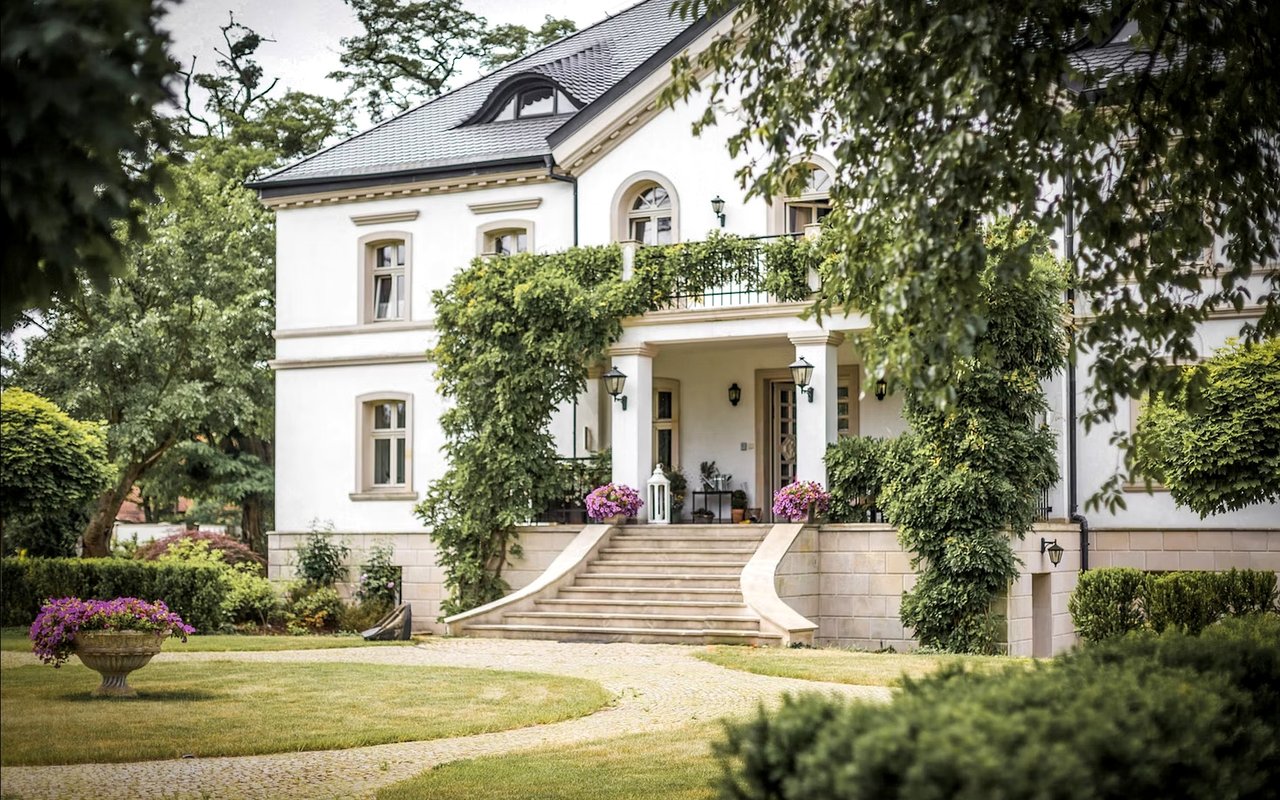
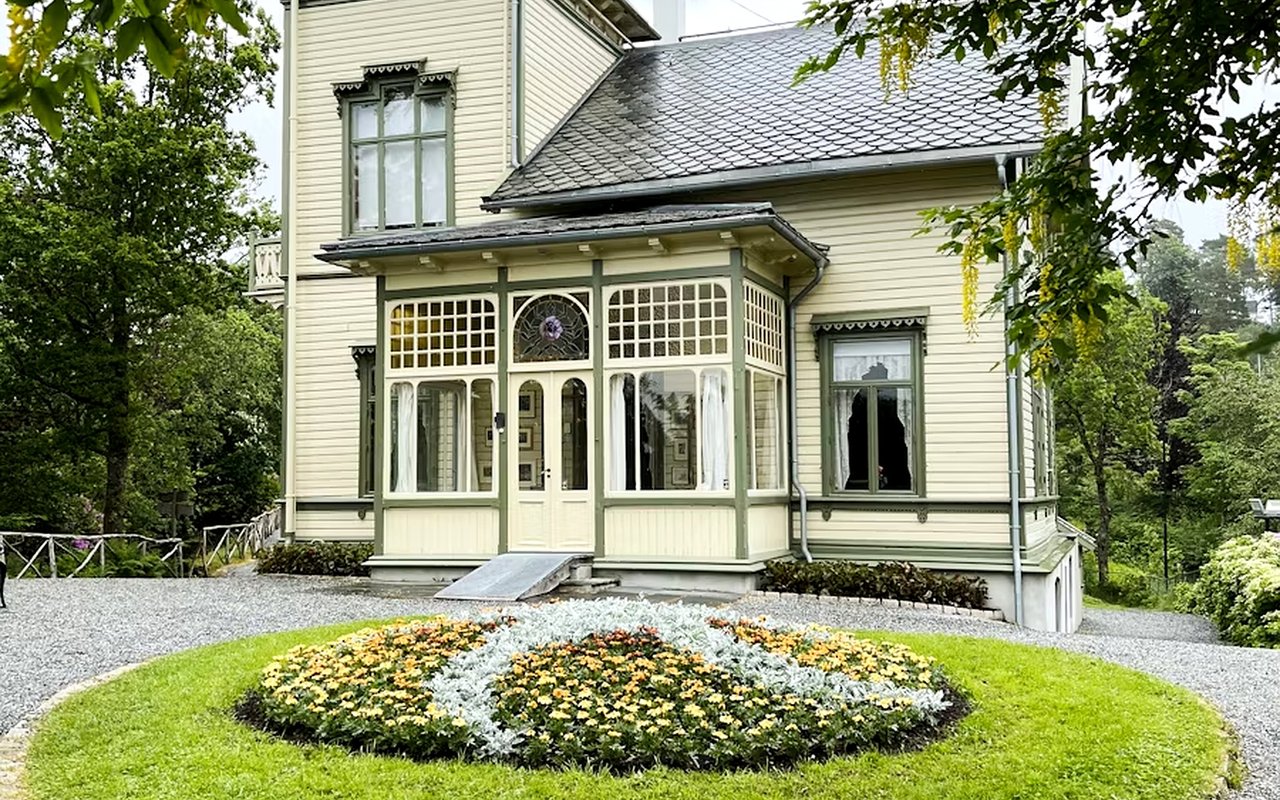
Two homes go under contract in Brookfield the same week. Same assessed value, same school district, same distance to I-84. One buyer closes and gets exactly the tax bill they expected. The other gets that bill, and then a second one, from an office they'd never heard of before closing day.
That second bill isn't a mistake and it isn't a scam. It's a special taxing district, and Brookfield has more of them than most buyers realize when they're comparing listings on price and square footage alone.
What the Town Mill Rate Actually Tells You
Every Brookfield property tax bill starts with the same number: the town's mill rate. According to Know Your Build, Connecticut taxes real estate at 70 percent of its appraised market value, so a $600,000 home carries an assessed value of about $420,000 regardless of where in town it sits. Multiply that assessed value by the mill rate, divide by 1,000, and you get the annual town tax.
That mill rate hasn't been standing still. Brookfield's Board of Finance approved a rate of 27.90 mills for fiscal year 2024-25. Voters at referendum pushed it to 28.93 mills for 2025-26, a 3.69 percent increase tied to two new police officers and improvements at Whisconier Middle School. The Board of Finance's budget for 2026-27, approved in March 2026, set the rate at 29.97 mills, another 3.59 percent increase.
Run that $420,000 assessed value through all three years and the trend is easy to see:
| Fiscal Year | Mill Rate | Annual Town Tax on $420,000 Assessed Value |
|---|---|---|
| 2024-25 | 27.90 | $11,718 |
| 2025-26 | 28.93 | $12,150.60 |
| 2026-27 | 29.97 | $12,587.40 |
That's roughly $870 more per year in town tax alone on an identical assessment, before a single dollar of any district charge. Anyone budgeting off a mill rate they saw quoted last year, or off a portal estimate that hasn't caught up to the current fiscal year, is already working from a stale number.
The Line Most Comparisons Miss
The mill rate above is what every Brookfield property owner pays the town. It is not, however, the whole bill for everyone. Tucked inside Brookfield's borders are several parcels governed by independent special taxing districts, entities with their own elected boards, their own budgets, and their own separate tax bills layered on top of the town's rate.
The state's Office of Policy and Management lists several of these districts by name within Brookfield: Candlewood Shores Tax District, Hickory Hills Tax District, High Meadow Tax District, and Newbury Crossing Tax District. A separate entity, Indian Fields Homeowners Association, functions similarly for its members. Each one sets its own annual charge, collected outside the town's regular tax bill, to fund infrastructure and amenities the town itself doesn't own or maintain in that pocket of Brookfield.
This is the detail that rarely makes it into a listing description or a portal comparison tool. Two homes can carry the same town-assessed value and the same town mill rate and still land on very different total annual costs, depending entirely on which side of a district boundary they fall.
Why Candlewood Shores Taxes Itself
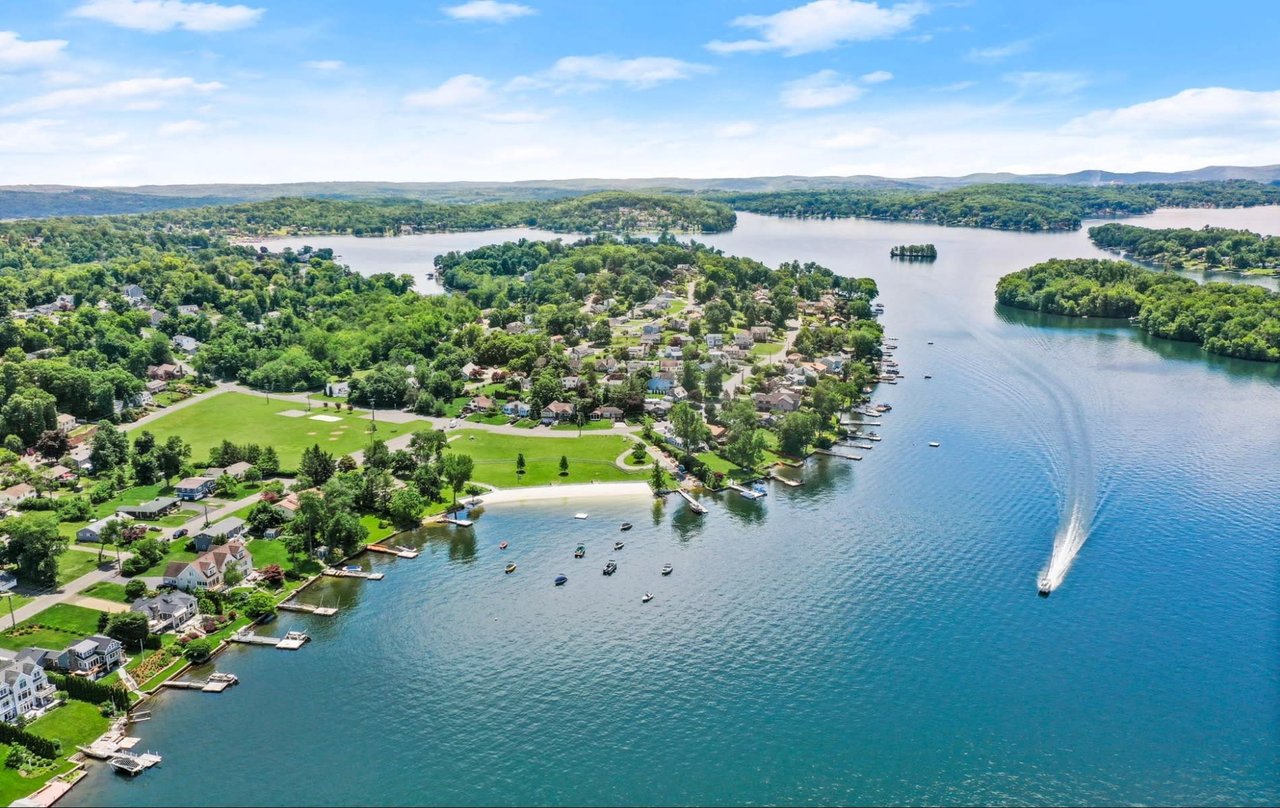
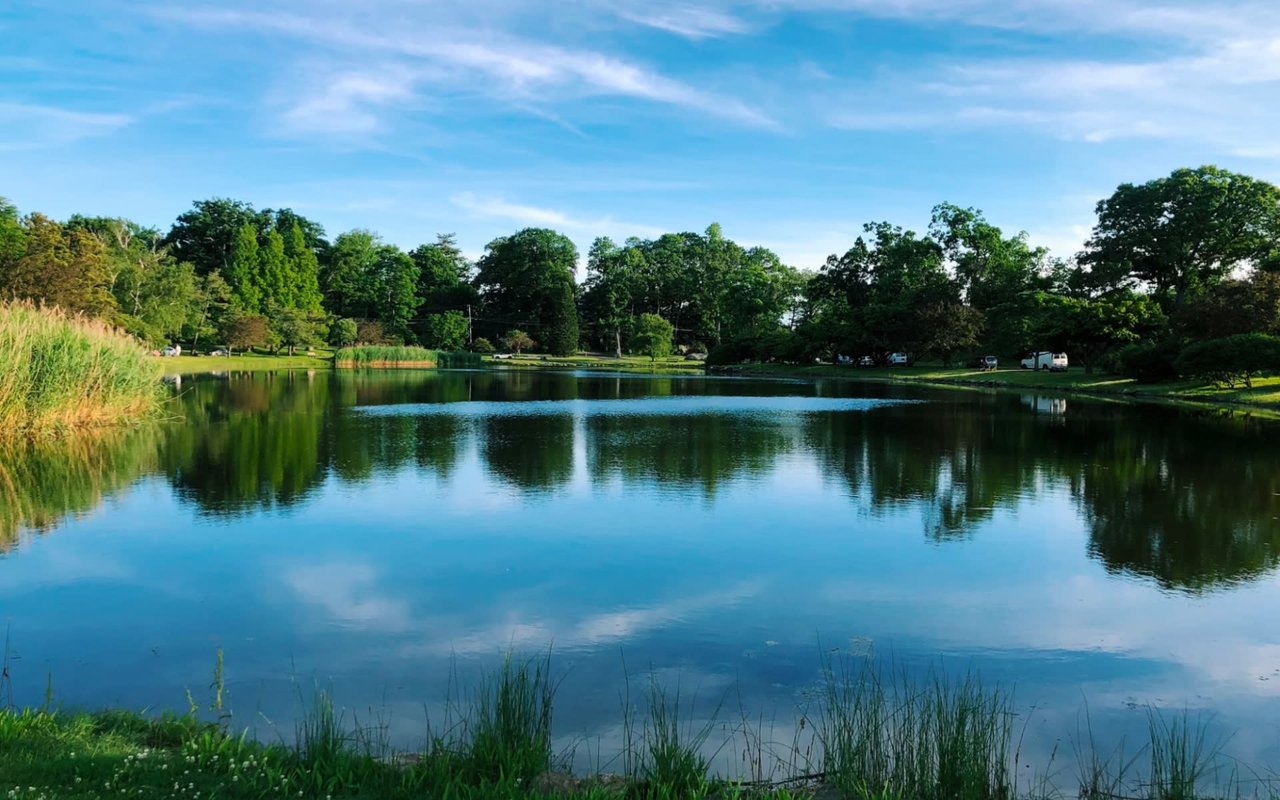
Candlewood Shores is the largest and best documented of Brookfield's special districts, and its history explains why the arrangement exists at all. The community was developed in 1948 as a private summer colony on Candlewood Lake. Residents formed a homeowners association in 1963, and in 1982 they voted to reorganize as a formal tax district under Connecticut statute. The goal was control: the district wanted to own its beach, ball field, roads, and water system outright rather than lease or license them from a private developer.
That happened on August 2, 1986, when the district purchased the entire community, infrastructure included, from Candlewood Shores Estates. A portion of every resident's tax and water bill went toward paying off the debt from that purchase for the next sixteen years, until it was retired in 2002. Today a nine-member elected board runs the district, meets monthly at the Longview Drive clubhouse, and sets an annual budget that residents vote on each spring. Tax and water are billed as two separate accounts, both distinct from anything Brookfield's town hall sends.
In practical terms, a homeowner inside Candlewood Shores is paying the town for schools, police, and general services, and paying the district separately for the beach, the private roads, the ball field, and a water system the town doesn't operate at all. It isn't double billing for the same service. It's two different entities, each responsible for a different slice of what keeps the neighborhood running.
What It Means for Total Carrying Cost
None of this shows up on a Zestimate. It doesn't appear on the town's public assessment card either, since the district's own budget and fee schedule live with the district, not with Brookfield's finance office. A buyer working strictly from list price, town mill rate, and a mortgage calculator will land on a number that's accurate for most of Brookfield and incomplete for a specific set of addresses inside it.
This matters most for anyone comparing a home along Candlewood Lake to a comparable listing elsewhere in town, or comparing Brookfield broadly to a neighboring lake town. The sticker price and even the town's mill rate can look identical while the actual annual carrying cost diverges by a meaningful amount once a district's separate tax and water bill enters the picture. The gap isn't hidden on purpose. It's just structural, and it only surfaces if someone asks the right question before, not after, closing.
Questions to Ask Before You Compare Two Brookfield Listings
- Is this parcel located inside a special taxing district, and if so, which one?
- What does the district's separate bill actually fund: roads, beach access, a private water system, common land?
- Is the district's tax billed annually, and is water billed as a separate account from tax, as it is in Candlewood Shores?
- Has the district's own budget changed recently, and when do residents vote on it?
- Does the property come with amenities tied to that district charge, like beach passes, boat moorings, or a ball field, that a comparable non-district home wouldn't include?
A buyer who asks these questions before writing an offer is pricing the actual cost of ownership, not just the town's share of it.
A Few Common Questions
Does every home in Brookfield sit inside a special tax district? No. Most of Brookfield is taxed only by the town at the standard mill rate. The special districts cover specific, named pockets, largely concentrated around Candlewood Lake and a handful of other developments, not the town as a whole.
Does being inside a district affect resale value? It can work either way. The district charge funds tangible amenities like a private beach, moorings, or a maintained road network that a comparable non-district home doesn't have access to at all. Whether that's a net positive or a net cost depends on how much a given buyer values those specific amenities against the added annual bill.
How do I find out if a specific address is inside one of these districts? The town assessor's records and the property's deed will typically reference district membership, and the district itself can confirm current fees and what they cover. This is exactly the kind of detail worth verifying before an offer rather than after an inspection period closes.
Comparing Brookfield to another Candlewood Lake town, or comparing two Brookfield neighborhoods to each other, means looking past the mill rate on the county website and asking what else might be billed separately. Bowman Properties works this exact stretch of Fairfield and Litchfield County every day, from Candlewood Shores to Brookfield Center, and can walk you through what a specific address actually costs to own before you write an offer. If you're weighing a move to Brookfield or sizing up a lake-adjacent listing anywhere in Greater Danbury, work with Lisa to get the full picture, not just the headline number.
This article is general information, not legal, tax or financial advice. Consult a qualified professional about your situation.