If you are thinking about buying a condo or planned-community home in Southbury, you are not alone. Southbury’s mix of owner-occupied housing, outdoor amenities, and low-maintenance living makes attached homes appealing for many buyers, especially if you want less exterior upkeep without giving up space or community features. This guide will help you understand how Southbury condos and planned communities work, what to compare, and how to shop with more confidence. Let’s dive in.
Why Southbury appeals to condo buyers
Southbury offers a lifestyle that attracts buyers looking for convenience and flexibility. The town has nearly 20,000 residents, a high owner-occupied housing rate, and a large share of residents age 65 and older, which helps explain the ongoing demand for lower-maintenance ownership options.
The town also supports an active lifestyle. Southbury maintains 11 parks, a town pool, a boat ramp and dock on Lake Lillinonah, a walking track, and a range of fields and courts. It also offers Interstate 84 access while aiming to preserve its scale and country feel, which gives buyers a blend of accessibility and open space.
Southbury’s housing plan is also clear about the value of variety. The town supports a broad range of housing types, including single-family homes, townhomes, apartments, and condos, so residents at different life stages can remain in town.
Condos vs planned communities in Connecticut
Before you compare floor plans, it helps to understand the legal structure. In Connecticut, the Department of Consumer Protection distinguishes between condominiums, cooperatives, and planned communities, and those differences affect ownership, maintenance, and shared expenses.
In a condominium, you own your individual unit while common areas are jointly owned by unit owners. In a planned community, ownership and responsibility can be divided differently between lot owners and the association. Connecticut’s Common Interest Ownership Act governs these communities, including association duties, common expenses, and owner rights.
That means the word “townhouse” does not tell you enough on its own. Two homes with similar layouts may come with very different maintenance obligations, rules, and monthly charges depending on the legal structure and association setup.
What ownership usually includes
A condo or planned-community purchase often means you are trading some independence for shared maintenance and shared rules. According to Connecticut buyer guidance, condo owners pay the association for upkeep of common areas while remaining responsible for the unit itself.
That can be a major advantage if you want less day-to-day exterior maintenance. It can also create important questions about what the association handles, what you handle, and how well the community is funded to cover future needs.
Southbury communities worth comparing
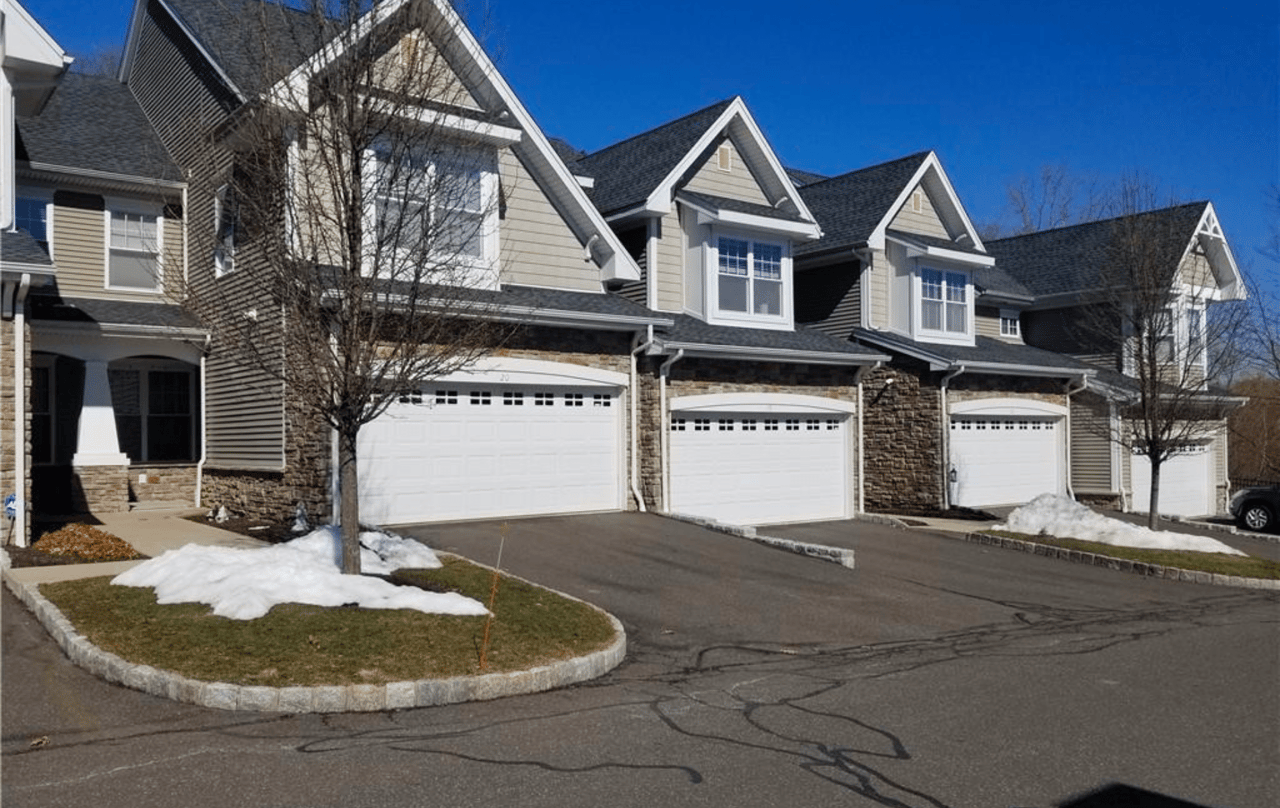
Southbury has a range of attached-home communities, from large amenity-rich options to smaller enclaves. For most buyers, the best fit comes down to lifestyle, maintenance expectations, and financial structure rather than the label alone.
Heritage Village
Heritage Village is the largest attached-home community in Southbury and one of the most established. Southbury’s Affordable Housing Plan described it as Connecticut’s largest active-adult community, with more than 4,100 residents on 1,000 acres.
The association says the community includes 2,580 condos with 13 models and one- to three-bedroom floor plans. Features include garages, patios or decks, and reduced exterior-maintenance chores, along with access to more than 70 clubs and groups, tennis and pickleball courts, private pools, and golf membership options.
For buyers, Heritage Village is often a scale-and-amenities conversation. If you want many choices, organized activities, and a broad amenity package, it stands out immediately.
Heritage Crest
Heritage Crest offers a smaller setting. The association describes 100 homes across six courtyards on 49 wooded acres, with attached garages, decks or patios, and a private heated pool.
The community says it is self-managed, accepts all ages, and has monthly fees split between an HOA and a separate tax district. That structure makes Heritage Crest a good reminder to ask exactly what recurring charges come with ownership and how those charges are organized.
Old Field Association
Old Field Association provides a more boutique option. The association describes 51 townhomes and condos in a historic-district setting, with landscaping and open space, plus an in-ground pool, tennis court, and clubhouse.
The community says a management company handles day-to-day issues, monthly common charges, and maintenance of common elements. For buyers who prefer a professionally managed setup, this is an important point to compare.
How to compare Southbury condo communities
A smart condo search in Southbury should go beyond finishes and square footage. The strongest comparison framework is based on how the community operates and how that aligns with the way you actually live.
Compare scale and setting
Some buyers want a large community with more activity and more amenities. Others prefer a smaller, quieter setting with fewer units and a more contained footprint.
In Southbury, both options exist. A larger community may offer more features and social opportunities, while a smaller one may feel simpler to navigate and easier to get to know.
Review the amenity package
Amenities can add real value, but only if you expect to use them. Pools, courts, clubhouses, clubs, and open space may justify a higher fee for one buyer and feel unnecessary to another.
Think honestly about your routine. If you are paying for amenities every month, it helps if those amenities support the lifestyle you want.
Understand maintenance scope
This is one of the most important parts of the decision. Ask what the association maintains, what falls to you, and how exterior repairs, landscaping, snow removal, and common-area upkeep are handled.
The value of a monthly fee depends heavily on what it covers. A higher fee may still make sense if it reduces your repair exposure or handles services you would otherwise pay for yourself.
Check parking and storage
Do not treat parking and storage as minor details. Garages, assigned spaces, guest parking, and storage areas can shape everyday convenience.
If you have more than one vehicle, need easy guest access, or want room for seasonal items, confirm these details early. Small practical issues can have a big effect on long-term satisfaction.
Ask about pets and rentals
Connecticut’s buyer guidance specifically recommends asking about restrictions that affect daily life. That includes pet rules, leasing restrictions, occupancy rules, dues, and fines.
Even if a rule seems unimportant now, it may matter later. If your plans could change over time, it is smart to understand how flexible the community is before you buy.
Look at management style
Southbury communities can be self-managed or professionally managed. Neither is automatically better, but the management approach can affect communication, maintenance coordination, and how issues get resolved.
Ask who handles daily operations and how owners communicate with the association. You want to know what support structure is in place after closing, not just during the sale.
Evaluate financial health
A condo is not just a home. It is also an operating budget, a set of governing documents, and a shared financial system.
From a resale and ownership standpoint, some of the biggest questions are whether reserves are adequate, whether special assessments may be likely, whether owners are delinquent on charges, and whether the budget supports future upkeep. Strong due diligence here can help you avoid expensive surprises.
Southbury pricing and resale context
Current market data in the research report show 50 condos for sale in Southbury with a median listing price of $289,000. The broader Southbury market shows 92 homes for sale, a median sale price of $510,000, and a median of 45 days on market.
That suggests attached-home inventory may offer a lower entry point than the overall town market. It also suggests that community-specific factors such as condition, updates, fees, and association health can have a major effect on resale performance.
In other words, one Southbury condo community should not be treated as a stand-in for all of them. Buyers tend to make better decisions when they compare the documents, the fees, and the maintenance model, not just the kitchen updates or the bedroom count.
Your Connecticut condo due diligence checklist
Connecticut’s Department of Consumer Protection gives buyers a clear roadmap. Before closing, review the key documents and ask direct questions about finances, rules, and upcoming costs.
Documents to review
- Declaration
- Bylaws
- Rules and regulations
- Recent budget
- Last 12 months of meeting minutes
Questions to ask
- Are reserves adequate?
- Are there unpaid common charges?
- Is major capital spending expected?
- Are there delinquent owners or foreclosures?
- Are there restrictions on leasing or occupancy?
- What are the pet, parking, age, dues, and fine rules?
- Is the community self-managed or professionally managed?
Why these questions matter
These details shape both your monthly cost and your day-to-day experience. They can also affect financing, resale appeal, and the likelihood of future assessments.
Buying into a community means buying into its systems as well as its floor plans. The more clearly you understand those systems, the better positioned you are to choose the right fit.
How to choose the right Southbury fit
The right condo or planned community in Southbury depends on your priorities. You may care most about lower maintenance, amenities, a specific setting, or the long-term predictability of fees and association management.
A thoughtful home search should connect those priorities to the actual documents and operating structure of the community. That is where experienced local guidance can make a real difference, especially when two properties look similar online but function very differently in real life.
If you want help comparing Southbury condos and planned communities with a practical, detail-focused approach, connect with Lisa Bowman. You will get local guidance, clear answers, and a more confident path to the right fit.
FAQs
What is the difference between a condo and a planned community in Southbury, CT?
- In a condominium, you own your unit and share ownership of common areas with other owners. In a planned community, ownership and maintenance responsibilities can be divided differently between owners and the association.
What should buyers review before purchasing a Southbury condo?
- Buyers should review the declaration, bylaws, rules and regulations, recent budget, and the last 12 months of meeting minutes, then ask about reserves, unpaid charges, upcoming capital expenses, and occupancy or leasing restrictions.
Are condo fees in Southbury, CT worth it?
- Condo fees can be worth it if the services, maintenance coverage, and amenities match your needs. The key is understanding exactly what the fee covers and whether the community’s finances appear healthy.
What makes Heritage Village different from other Southbury communities?
- Heritage Village stands out for its size, large amenity package, multiple floor plans, and active-adult community structure, while other Southbury communities may be smaller, quieter, or managed differently.
Why do rules matter when buying in a Southbury planned community?
- Rules affect everyday living, including pets, parking, rentals, occupancy, dues, and fines. They also shape how flexible the property may be for your future plans.